Most travel brands pour their energy into ranking for the right queries. That is important, but it is only half the picture. Position zero, the space above every organic result, is where search decisions increasingly begin, and it is underused by most independent travel operators.
That space is contested differently than it used to be. For years, it belonged almost entirely to featured snippets, boxes that Google places above its standard search results, lifting a short answer directly from one web page to answer a query before the user clicks anything.
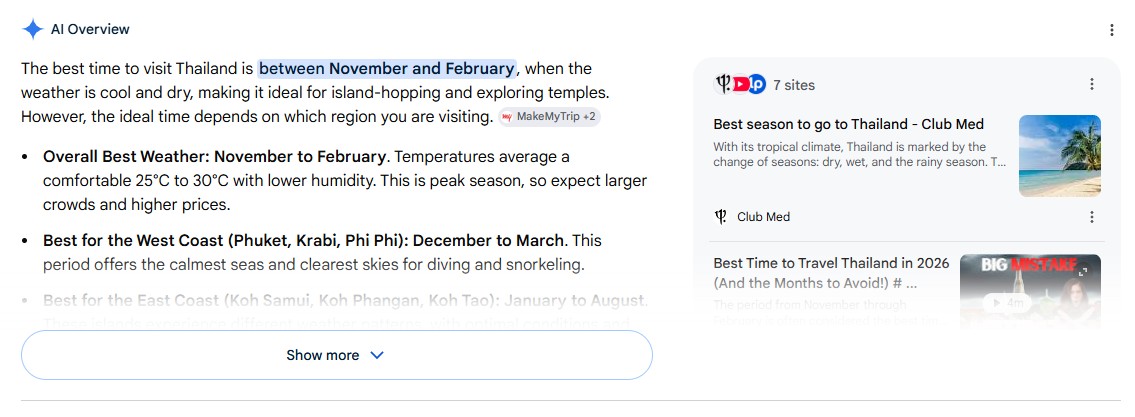
In 2026, AI Overviews have taken over much of that space for informational queries. Featured snippets still appear for specific query types, particularly comparison tables, step-by-step questions, and factual planning queries, but for many of the "what is", "best time to", and "is it safe to" questions travel brands used to target, AI Overviews now appear instead.
The good news is that the content and structure that wins a featured snippet is almost identical to what gets cited in an AI Overview. This guide focuses on exactly that: how to write and format answers that win position zero, whatever form it takes. For the broader strategy around AI citations, schema, and E-E-A-T, our guide to Google AI Overviews for travel operators covers the full picture.
At Boost Brands, we work with travel and leisure businesses on exactly this, and position zero remains one of the most underused opportunities in travel SEO. This guide covers the snippet types you can still win, how to structure the answer, where to put the content on your site, and how to find the right opportunities.
What are featured snippets and how have AI Overviews changed position zero?
The boxed answer at the top of Google
A featured snippet is a short answer that Google lifts from a web page and shows in a box above the standard organic results, ahead of everything else. Because it sits ahead of the number one organic result, it is known as position zero, and that placement can put a small travel brand above far bigger competitors for a specific question without years of link building.
Snippets appear mostly for informational and question-style searches, which is exactly the kind of query a traveller runs while planning a trip. Google pulls them in a few distinct formats. Paragraph snippets are a direct text answer and the most common format by a wide margin, with research from STAT putting paragraphs at roughly seven in ten snippets. List snippets, numbered or bulleted, are ideal for itineraries and packing guides. Table snippets handle price, season, and distance comparisons.
Where featured snippets still win over AI Overviews
AI Overviews now appear for many of the informational queries that used to return snippet boxes. But snippets persist where a single, clean answer from one source is more useful than a synthesised response. Comparison tables, precise factual queries like visa requirements and flight times, and step-by-step planning questions still frequently return snippet boxes. For travel brands, that means the snippet opportunity is now more targeted, focused on the formats where a clear, structured answer from one page beats a multi-source synthesis.
Why the content work is the same regardless of format
The practical implication for your content is smaller than it might seem. Whether position zero is occupied by a snippet or an AI Overview, the answer that wins it shares the same characteristics: a direct response in the first sentence, a clear question heading, specific and verifiable information, and a format that matches the query. Learning to write for one is learning to write for both.
Why position zero matters for travel in the zero-click era
Visibility matters as much as the click
Search in 2026 increasingly answers the question on the results page itself, through snippets, People Also Ask, and AI Overviews, so a growing share of searches now end without a click. For travel brands, appearing in the box builds recognition with a traveller who may book later through a direct search, a social touchpoint, or a phone call. Our piece on zero-click discovery and AI citations covers this shift in more detail.
Snippets that send the traveller to you, not the OTA
For travel brands competing with online travel agencies for direct bookings, a snippet is a chance to be the trusted answer before the traveller ever reaches an OTA listing. Win the box for a destination or planning question and your brand meets the traveller at the research stage, then pulls them toward your own booking environment. The pattern we see with travel clients is that snippet visibility on the right questions reduces reliance on OTAs and helps protect margin, though it is influence rather than a guarantee.
When a snippet earns no click, and why that can still be a win
Some snippets answer the question so completely that the searcher never clicks, and it is worth planning around that rather than ignoring it. The fix is to choose your battles: target questions that promise more behind the answer, like "how many days do you need in Kyoto" or "what should you pack for a desert safari", rather than single-fact questions such as "what currency does Japan use" that a snippet closes off entirely. Done that way, the box earns you both visibility and, often, the click.
The snippet types travel content can realistically win
Paragraph snippets for destination and planning questions
Paragraph snippets win "what is", "is it safe to", and "best time to" questions, which describe most early-stage travel research. Think "is it safe to travel to Colombia", "what is the best time to visit the Maldives", or "do I need a visa for Kenya". Answer the question directly in the opening sentence, then expand below it, so Google can lift a clean, self-contained response. This is the same principle behind writing content that AI systems trust: clear, specific, answerable.
List snippets for itineraries, steps, and packing
List snippets reward sequence and item queries. Numbered lists win step-based questions like "how to plan a Patagonia trek", while bulleted lists win item questions like "what to pack for a summer safari". Build the content as a list on the page with a clear lead-in line above it, so Google can lift the whole set cleanly rather than guessing at your structure.
Table snippets for seasons, prices, and distances
Table snippets win comparison and data questions, such as "average temperature in Bali by month" or "flight time from Lisbon to New York". A properly formatted HTML table is far more liftable than the same figures buried in prose. Travel is full of these opportunities, because seasons, prices, durations, and distances all sit naturally in a grid.

How to structure the answer: The 160 characters that win the position
Front-load a tight, complete answer
Put the direct answer in the very first sentence beneath a question-style heading, then expand underneath. Aim for roughly 40 to 60 words. Google often displays only the first sentence or two, around 160 characters, so the opening line has to stand on its own.
The difference is easy to see. For "what is the best time to visit Thailand", a two-word answer like "November to February" tells the traveller almost nothing. A snippet-ready version reads: "Thailand is best from November to February, when the weather is dry and cool across most of the country, including the southern islands." That tight, self-contained answer is the one Google rewards.
Use clear question headings and match the format to the query
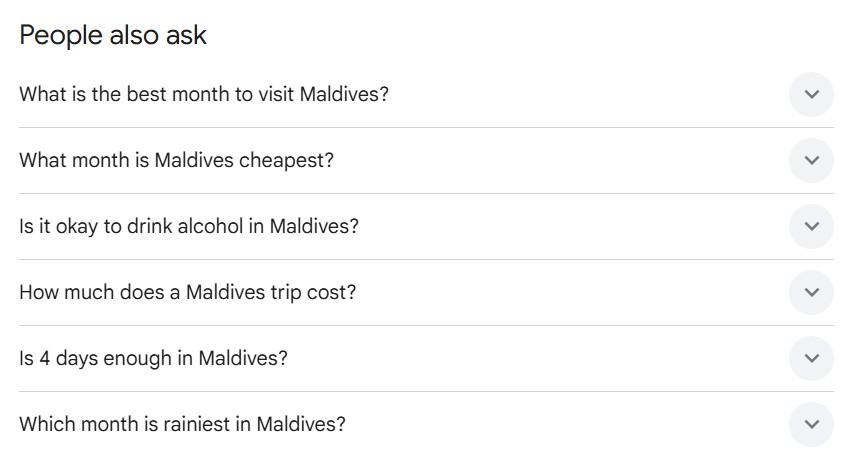
Phrase your H2s and H3s as the questions travellers actually type, then answer immediately beneath each one. Before writing, check the live results for your target question and see which format Google currently rewards, whether paragraph, list, or table. Then build your on-page answer in that exact format. A useful shortcut is People Also Ask: the questions in those boxes are the queries Google has already flagged as relevant, so they make ready-made headings. This approach also feeds directly into AEO and how to get featured in AI-driven search, since the two reward the same underlying content decisions.
Where to put your snippet-optimised content
Featured snippets and AI Overview citations are both pulled from normal web pages: blog posts, destination guides, FAQ pages, service pages. You do not need to build anything new. You need to optimise what you already have, or create new content in the formats you are already publishing. The same page can win a snippet for one query and an AI Overview citation for another, which is why the investment compounds across your whole site.
Blog posts and destination guides
These are the most common sources of paragraph and list snippets, and they are also the pages AI Overviews draw on most heavily when answering planning questions. A well-structured blog post that answers a specific question like "what is the best time to visit Tanzania" or "how many days do you need in Kyoto" is exactly what both Google and AI systems are looking for. The post does not need to be long. It needs to answer the question clearly in the first paragraph, with the rest of the content expanding on it with specific, verifiable detail that an AI can extract and cite.
FAQ sections on service and destination pages
FAQ sections on your core service pages are one of the highest-return places to optimise for both snippets and AI citations. Each question and answer pair is essentially a pre-formatted answer unit: a clear question heading, a direct response beneath it. AI Overviews extract these in exactly the same way snippet algorithms do, which means a well-structured FAQ section on your Kenya safari page is working for your visibility in both formats simultaneously. This is also where FAQ schema earns its keep, which our piece on FAQ schema for travel websites covers in full.
Standalone answer pages
For high-value questions with significant search volume, it can be worth building a page around a single question, a short focused piece of content that exists purely to own that answer. These perform well for both snippets and AI Overviews because the entire page is structured around one clear intent. They are common in competitive travel categories like visa requirements, best time to visit guides, and destination safety questions, and they are among the most citable page types in AI search precisely because their purpose is unambiguous.
How to structure the answer: the 160 characters that win the box
Front-load a tight, complete answer
Put the direct answer in the very first sentence beneath a question-style heading, then expand underneath. Aim for roughly 40 to 60 words. Google often displays only the first sentence or two of a featured snippet, around 160 characters, so the opening line has to stand on its own.
AI Overviews work differently, synthesising answers from multiple sources rather than lifting one passage, but they extract from the same part of the page. The opening sentence beneath a clear heading is where both formats look first.
The difference is easy to see. For "what is the best time to visit Thailand", a two-word answer like "November to February" tells the traveller almost nothing and gives AI nothing to work with. A snippet-ready, AI-citable version reads: "Thailand is best from November to February, when the weather is dry and cool across most of the country, including the southern islands." That tight, self-contained answer is the one Google rewards in a snippet box and the one AI Overviews extract when building a synthesised response.
Use clear question headings and match the format to the query
Phrase your H2s and H3s as the questions travellers actually type, then answer immediately beneath each one. Before writing, check the live results for your target question and see which format Google currently rewards, whether paragraph, list, or table, and whether a snippet box or an AI Overview is occupying position zero. Then build your on-page answer in that exact format. A useful shortcut is People Also Ask: the questions in those boxes are the queries Google has already flagged as relevant, so they make ready-made headings. This approach also feeds directly into AEO and how to get featured in AI-driven search, since the two reward the same underlying content decisions.
How to find position zero opportunities
Mine People Also Ask and question tools
Start with Google's People Also Ask boxes, which reveal the questions Google already considers relevant for your category, then add tools like AlsoAsked or AnswerThePublic to build a full question bank for each destination, tour, or property. These are the same questions AI Overviews are drawing on when they answer travel queries, so building content around them serves both formats at once.
Prioritise questions with clear, factual answers that match real traveller intent. A tour operator in Peru could build a bank around altitude, season, fitness, and packing questions for the Inca Trail, and each well-answered question is a potential snippet win and a potential AI Overview citation.
Target questions where you already rank
The fastest wins come from queries where you already sit in positions two to five. A small content tweak, tightening the opening answer, adding a summary table, restructuring an FAQ, can lift you into a snippet box or improve your citation rate in AI Overviews for that query.
Low-volume travel questions can be high value: a fifty-search query that leads to a multi-thousand-pound booking beats a high-volume query full of window shoppers. Check which page holds the snippet or AI Overview citation now, see what it does well, and publish a clearer, more complete, and more current answer. Our tips on digital marketing for travel agencies cover how to prioritise this work alongside the rest of your SEO activity.
The brands that answer well are the brands travellers remember
Position zero has always rewarded the brand that answers the question best. The format above the results has changed, moving from a single snippet box to AI-generated panels that synthesise multiple sources, but the underlying logic has not. Whether the space is occupied by a snippet or an AI Overview, the travel brand that gets there has written something specific, structured, and genuinely useful, and placed it where Google can find and extract it.
That is a content craft problem, not a budget problem, and it is one of the few places in travel SEO where a well-run independent operator can consistently outperform a much larger competitor. The common AEO mistakes travel brands make are largely the same as the mistakes that cost brands their snippet placements: vague answers, wrong formats, content that describes rather than informs. At Boost Brands, we help travel and leisure businesses identify the right questions, structure the right answers, and get them in front of the right people at the right moment in the planning journey.
Want to know which position zero placements your travel brand could realistically win right now? Tell us about your destinations and the questions your travellers ask, and we will show you where the opportunities are. Let's talk.
FAQs
What is a featured snippet in travel search?
A featured snippet is the short answer Google displays in a box at the very top of the results, lifted directly from a web page. In travel, it usually answers a planning question like "what is the best time to visit Iceland" or "do I need a visa for Brazil". Because it sits above the standard organic results, it is called position zero, and winning it can put a smaller travel brand ahead of much larger competitors for that question.
Have AI Overviews replaced featured snippets?
Largely for informational queries, yes. AI Overviews now appear at the top of results for many of the questions travel brands used to target for snippets. Featured snippets still appear for comparison tables, step-by-step questions, and precise factual queries. The content work that wins snippets is almost identical to what gets cited in an AI Overview, so optimising for one tends to improve your chances in both.
How long should a featured snippet answer be?
The sweet spot is roughly 40 to 60 words, or about 160 to 320 characters. Put the direct answer in the first sentence under a clear question heading, then expand beneath it. Concise, self-contained answers are consistently the ones that win position zero, and they are also the format AI Overviews extract most reliably.
Do featured snippets actually get clicks, or just give the answer away?
Both. Some snippets fully answer a simple question and the searcher does not click. Others give a partial answer that prompts a click for the full detail. The same is true of AI Overviews. The strategy is to target questions that promise more behind the answer, like "how many days do you need in Kyoto", rather than single-fact questions that a snippet or AI panel closes off completely.
How long does it take to win a featured snippet?
With a clean implementation on a page that already ranks reasonably well, snippet wins can appear within a few weeks. AI Overview citations can take longer to shift, typically three to six months for meaningful movement. Keeping content accurate and current, especially time-sensitive travel facts like visa rules and seasons, is what helps you hold both.